
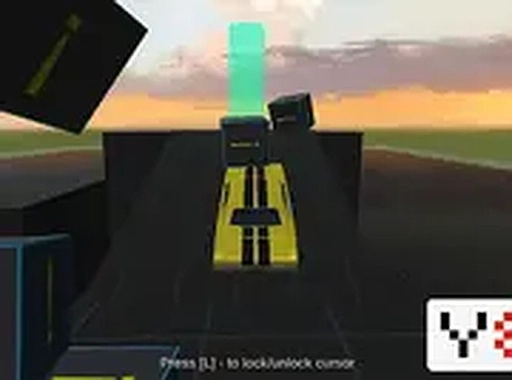
Course Layout & Visual Style
Each track in Polygon Track Navigator is built from geometric shapes that form walls, barriers, and turns. The clean, low-polygon visual style keeps the focus on the driving line rather than distractions. Courses vary in complexity, with some featuring tight corridors and others opening into wider areas with scattered blocks. The bright color palette helps distinguish safe paths from obstacles at a glance.
Vehicle Control & Handling
The car responds to keyboard inputs with a balance of acceleration and turning that rewards smooth inputs. Quick taps on the directional keys allow for fine adjustments, while holding them down produces wider arcs. Mastering the relationship between speed and turning radius is essential, as faster travel requires earlier and more gradual steering to avoid collisions. The responsive controls make each attempt feel consistent.
Progression Through Difficulty
Early courses introduce basic layouts with few obstacles, allowing players to build confidence with the handling model. Later stages increase the density of barriers and introduce more complex routing. The difficulty curve feels natural, with each new challenge building on skills learned in previous tracks. Players who take time to learn each course before pushing for speed will find the progression manageable.
Full Screen & Accessibility Options
Switching to full screen mode expands the viewing area, which can help with anticipating upcoming turns and obstacles. The game runs entirely in a web browser with no downloads required, making it accessible on any desktop computer with an internet connection. Controls are limited to the keyboard, keeping the setup simple and the focus on driving.
Strategic Approach to Each Course
Rather than rushing through, effective players study the layout from the starting position before moving. Identifying where obstacles cluster and where the path narrows allows for planning a safe route. Some sections reward a cautious crawl, while others can be taken at higher speed once the correct line is memorized. Experimenting with different speeds on the same course reveals which approach works best.







Comments
0 comments