
Core Flight Mechanics
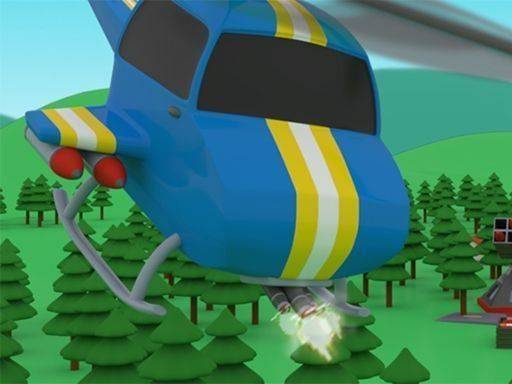
Players take the role of a helicopter pilot in a fast-paced arcade setting. The primary task is to guide the aircraft across a map while avoiding various structures and other flying hazards. Controls are designed for immediate use with keyboard or mouse, allowing newcomers to start quickly. The challenge lies in maintaining steady flight while adjusting to changing conditions. Each movement requires careful timing, as the environment is dense with potential collisions. Success depends on smooth maneuvering rather than speed alone.
Mission Structure & Objectives
The game presents four distinct missions, each with its own set of goals. These objectives are not simply about reaching a destination; they require specific actions at precise locations. For example, one mission may involve delivering supplies to a marked zone, while another might focus on reconnaissance. The map includes landmarks that help with navigation, but players must stay alert to shifting hazards. Completing each mission unlocks the next, with difficulty increasing as new obstacles and tighter paths appear.
Risk Management & Limited Chances
A key element is the limited number of attempts. Each collision with an obstacle or hazard reduces this count. Losing all chances before finishing all missions ends the session. This system encourages careful planning and risk assessment. Players learn to prioritize survival over speed, sometimes choosing safer routes that take longer. The tension of managing this resource adds depth to each flight, making every decision matter. It rewards patience and precision over reckless flying.
Skill Progression & Practice
The game is designed to build player skill over time. Beginners focus on basic movement and obstacle avoidance, while experienced pilots work on multitasking between navigation and objectives. Regular practice improves reflexes and spatial awareness. The short mission format allows for repeated attempts without long delays, making it easy to learn from mistakes. Players often develop personal strategies, such as memorizing obstacle patterns or finding optimal flight paths. This progression from novice to competent pilot is a core part of the experience.
Visual Style & Atmosphere
The graphics adopt a clean, arcade-inspired look that emphasizes clarity over realism. Buildings and obstacles are distinct, making them easy to spot at a distance. The color palette uses bright tones to keep the screen readable during fast movements. Background elements provide a sense of scale without distracting from gameplay. The overall presentation supports the focus on action and precision, ensuring players can react quickly to changing situations. This visual approach suits the pick-up-and-play nature of the title.


















Comments
0 comments