
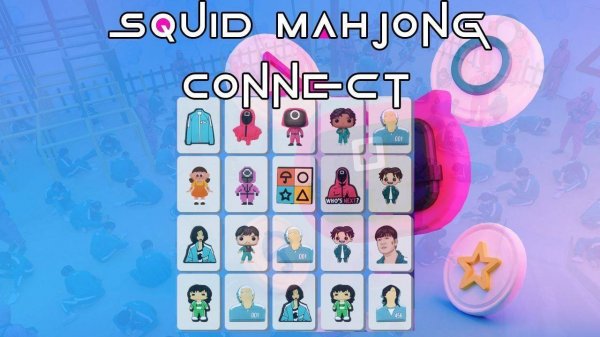
Matching Mechanics
At its core, this puzzle challenges players to locate pairs of identical tiles scattered across a board. The twist lies in the connection rule: a valid match requires a path between the two tiles that makes no more than two 90-degree turns and does not pass through any other tile. This simple constraint transforms a basic memory exercise into a spatial reasoning puzzle. Players must consider tile positions and plan sequences to clear the board efficiently.
Visual Theme and Atmosphere
The game adopts a bright, cheerful ocean aesthetic. Tiles feature friendly sea life characters such as squids and other marine animals. The color palette uses soft blues and greens to create a calm environment. This visual approach makes the game approachable for younger players while remaining pleasant for adults. The lack of time pressure reinforces the relaxed mood, allowing players to solve puzzles at their own pace.
Level Progression
Each level presents a new arrangement of tiles, ensuring that no two puzzles feel identical. As players advance, the board layouts become more complex, requiring greater attention to path possibilities. The game does not introduce new mechanics with each level but instead relies on increasingly intricate tile placements to raise the difficulty. This gradual increase in challenge keeps the experience fresh without overwhelming newcomers.
Strategic Play
Success depends on more than just spotting matching pairs. Removing tiles from the center of the board early can open up new paths and prevent deadlocks. Players must also anticipate how removing one pair might block or enable future matches. A shuffle option is available when no valid moves remain, but relying on it too often can slow progress. Observing the entire board before making a move often reveals hidden connections.
Session Design
Puzzles are designed to be completed in short bursts, making the game suitable for quick breaks or longer play sessions. Each level can be finished in a few minutes, and there is no penalty for taking time to think. This structure appeals to casual gamers who want a low-commitment activity, as well as puzzle enthusiasts who enjoy methodical problem-solving.

Comments
0 comments